
Object Types
Settings > Object Tracking > Object Types
The process to create an object is:
- Create the Object Type (Settings > Object Tracking > Object Type)
- Define the Object Divisions (Settings > Object Tracking > Object Divisions)
- Create the Object (Records > Objects > New)
Create the Object Type
The structure of the Object Number (how many divisions, etc.) is determined by the setup of the Object Type. Object Types are defined in Settings > Object Tracking > Object Types:

New Object Type Setup - Example
General:
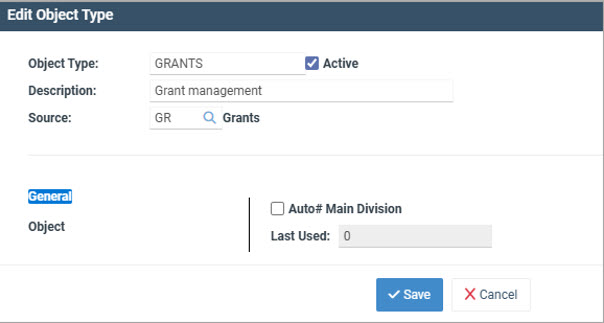
Object Type: The Object Type you wish to create (e.g., PROJECT, EVENT, JOB, etc.)
Description: A description of the object type.
Source: "AS" source type indicates object type is created for the Fixed Assets submodule. Otherwise, not required.
Active: No entry will be allowed if the object type is inactive.
Auto# Main Division: When adding new objects, this setting assigns the next sequential number to this division.
Object:
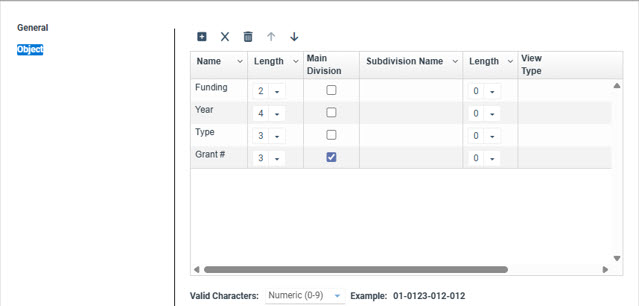
- Name: Name for the object number division. This name will appear on all reports, screens, and other relevant documents.
- Length: The number of characters in the object division.
- Main Division: The unique division that controls the object description (this is the division that will use an auto number).
- Subdivision Name: Name of the subdivision of the object. This is the name that will appear on reports and other documents.
- View Type: For use with Asset Object Type, and separates custom information fields used to set GL segments associated with each object division. Otherwise, not required.
Valid Characters: Choose what characters are allowed to be in object numbers.